
For businesses in construction, hospitality, or real estate, selecting the right toilet for various markets is not just about aesthetics or comfort—it’s about long-term functionality, cost-efficiency, and user satisfaction. Understanding the differences between American and European toilets plays a vital role in making the best purchasing decisions.
In this blog post, we’ll delve deep into the major differences between American and European toilets, focusing on aspects such as design, water usage, plumbing standards, and maintenance. As a B2B purchaser, you will gain valuable insights into which type of toilet fits best for different regional markets and how to optimize your procurement process for local preferences and regulations.
Table of Contents
- 1. Introduction to Regional Toilet Preferences
- 2. Design Differences Between American and European Toilets
- 3. Flushing Mechanisms: Efficiency and Functionality
- 4. Plumbing Standards and Installation Challenges
- 5. Water Efficiency and Regulatory Requirements
- 6. Maintenance and Longevity Considerations
- 7. The Role of Technology in Toilet Innovation
- 8. Cost Comparison: Initial and Long-Term Expenses
- Conclusion: Choosing the Right Toilets for Your Market
1. Introduction to Regional Toilet Preferences
The differences between American and European toilets stem from various factors, including historical preferences, plumbing infrastructure, water conservation efforts, and bathroom space availability. Understanding these preferences helps large-scale purchasers choose the appropriate products based on the target market.
In America, toilets often reflect a preference for comfort, with larger, taller designs that accommodate various user groups, including the elderly and disabled. Meanwhile, European toilets are generally designed with compactness and minimalism in mind due to smaller bathroom sizes.
Both regions are increasingly embracing modern technologies, such as water-saving mechanisms and smart toilet innovations, but the foundational design and functional preferences remain distinct.
2. Design Differences Between American and European Toilets
American Toilets:
- Typically feature a two-piece design with a separate bowl and tank.
- Tend to be larger and bulkier, often using elongated bowls that prioritize comfort.
- The focus is on user convenience and comfort height toilets, which are slightly taller than standard models.
- American toilets are often floor-mounted with visible water tanks, adding to their bulk.
European Toilets:
- European toilets tend to favor sleeker designs like wall-mounted or back-to-wall models, where the tank is hidden within the wall for a cleaner look.
- The design focuses on compactness, making it ideal for smaller spaces.
- Round bowls are more common in Europe, offering space efficiency but perhaps not the same level of comfort as elongated bowls.
- European toilets integrate more minimalist aesthetics, with clean lines and modern styling.
| Feature | American Toilets | European Toilets |
|---|---|---|
| Design | Two-piece, separate tank and bowl | Wall-mounted or back-to-wall, concealed tank |
| Size | Larger, bulky, comfort height | Sleek, compact, minimalist design |
| Bowl Shape | Elongated for comfort | Round for space efficiency |
| Mounting Style | Floor-mounted with visible tank | Wall-mounted with hidden tank |
| Space Requirement | Requires more bathroom space | Ideal for small spaces |
3. Flushing Mechanisms: Efficiency and Functionality
American Flushing Systems:
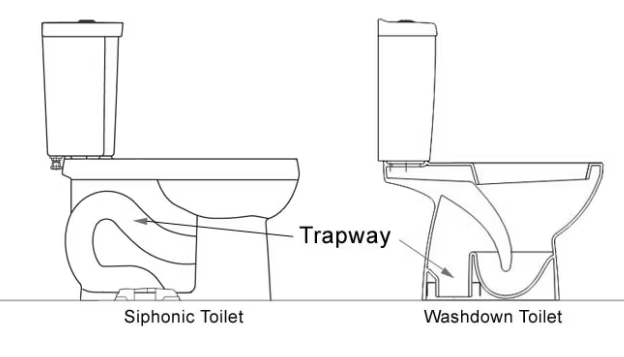
- American toilets often use a siphonic flushing system, which relies on creating a siphon to effectively remove waste. This system uses more water but ensures a cleaner bowl after each flush.
- The siphonic flush is typically gravity-based, allowing waste to be removed with less noise. However, it consumes more water compared to European models.
- Single-flush systems are still quite common in the U.S., though dual-flush options are becoming more popular for water conservation.
European Flushing Systems:
- European toilets utilize washdown flushing systems, where gravity pushes water directly into the bowl and out through the waste outlet.
- Washdown toilets are generally more water-efficient, using less water per flush but sometimes requiring more frequent cleaning due to less effective bowl clearance.
- Dual-flush systems are standard in Europe, offering a choice between a full flush (1.6 gallons or 6 liters) and a half flush (0.8 gallons or 3 liters) to conserve water.
4. Plumbing Standards and Installation Challenges
American Toilets:
- American plumbing standards support siphonic flushing systems, which require deeper and more extensive trapways.
- Installation is generally simpler due to floor-mounted designs, which do not require structural modifications to walls.
- American toilets typically require a standard drain system and are compatible with most U.S. building plumbing codes.
European Toilets:
- European wall-mounted models require more complex installation, often needing the tank to be concealed within the wall. This means the wall must be reinforced to support the toilet’s weight.
- Plumbing systems in Europe are optimized for washdown flushing, which may require adjustments in countries that traditionally use siphonic systems.
- European toilets typically use lower water pressure, which is well-suited for washdown toilets but may need modifications in other markets.
5. Water Efficiency and Regulatory Requirements
American Toilets:
- In the U.S., regulations like the Energy Policy Act of 1992 mandate that toilets use no more than 1.6 gallons per flush (GPF).
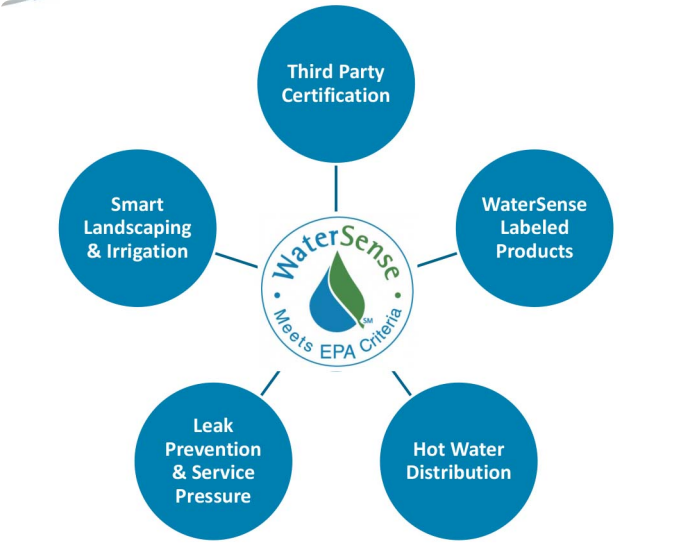
- To meet environmental standards, many American toilets now offer WaterSense-certified models, reducing water usage to as low as 1.28 GPF without compromising performance.
European Toilets:
- European toilets are more advanced in water conservation, thanks to the widespread use of dual-flush systems.
- Regulations may vary across countries, but most European toilets are designed to use as little as 0.8 gallons for liquid waste, making them more eco-friendly.
6. Maintenance and Longevity Considerations
American Toilets:
- Maintenance for American toilets is straightforward, with readily available parts.
- The siphonic flushing system, however, has more moving parts, which may require occasional repairs.
European Toilets:
- European toilets, especially wall-mounted models, can be more challenging to repair due to their concealed design. However, they tend to be lower-maintenance overall due to the simpler washdown flushing system.
7. The Role of Technology in Toilet Innovation
American Toilets:
- Smart toilets featuring heated seats, automatic flushing, and integrated bidet systems are becoming increasingly popular in the U.S.
- These innovations are often geared toward high-end markets, such as luxury hotels or premium residential projects.
European Toilets:
- European innovations focus on eco-friendly technology, with sensor-based flush systems and water-saving features becoming more common.
- Smart toilets in Europe emphasize hygiene and water efficiency, with integrated bidets and touch-free flushing systems becoming the norm.
8. Cost Comparison: Initial and Long-Term Expenses
American Toilets:
- Initial costs for American toilets tend to be lower, particularly for standard two-piece, floor-mounted models.
- However, higher water consumption means that long-term operational costs can be more expensive, especially in areas where water is costly.
European Toilets:
- European models, particularly wall-mounted toilets, come with a higher initial cost due to installation complexity and premium materials.
- However, long-term savings can be significant thanks to reduced water usage and lower maintenance needs.
Conclusion: Choosing the Right Toilets for Your Market
When deciding between American and European toilets for your B2B procurement needs, consider factors such as design preferences, water efficiency, plumbing standards, and costs. American toilets tend to offer comfort and straightforward installation, while European models emphasize space efficiency, modern design, and water conservation.
By understanding the differences between these two regional toilet types, B2B purchasers can make informed decisions that cater to the specific needs of their target markets.
For more information about back-to-the-wall toilets or to explore DanubeToilet’s product range, visit www.danubetoilet.com today.