In global hotel construction and high-end sanitary projects, bathroom cabinets are not just storage units—they are a core element of the overall bathroom design. Understanding the production process of bathroom cabinets helps procurement managers ensure product quality, delivery timelines, and customization capabilities, making it easier to select the right partner for hotel projects. In this article, we provide a full breakdown of the production process from raw material selection and design to finished products, including real hotel project customization examples to give you a clear view of the entire process.
Raw Material Selection: Quality Starts from the Source
The durability, lifespan, and aesthetics of bathroom cabinets largely depend on the materials used. Common materials include:
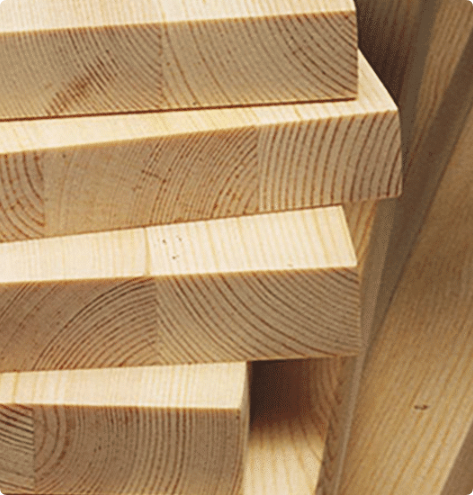
Solid wood
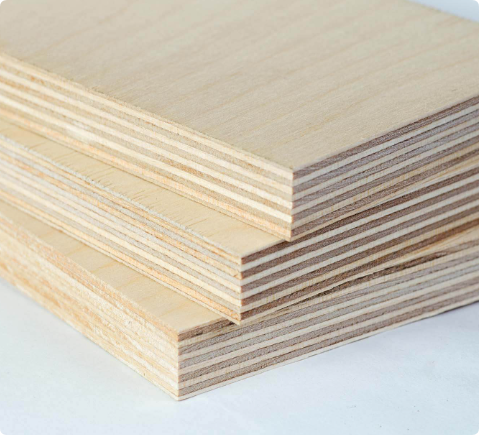
Plywood
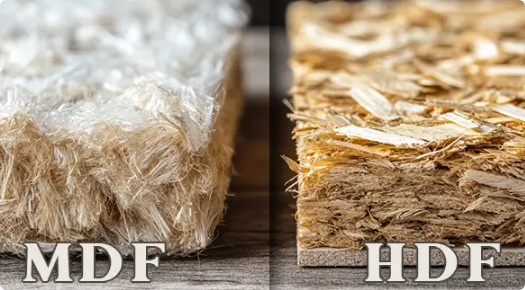
MDF/HDF
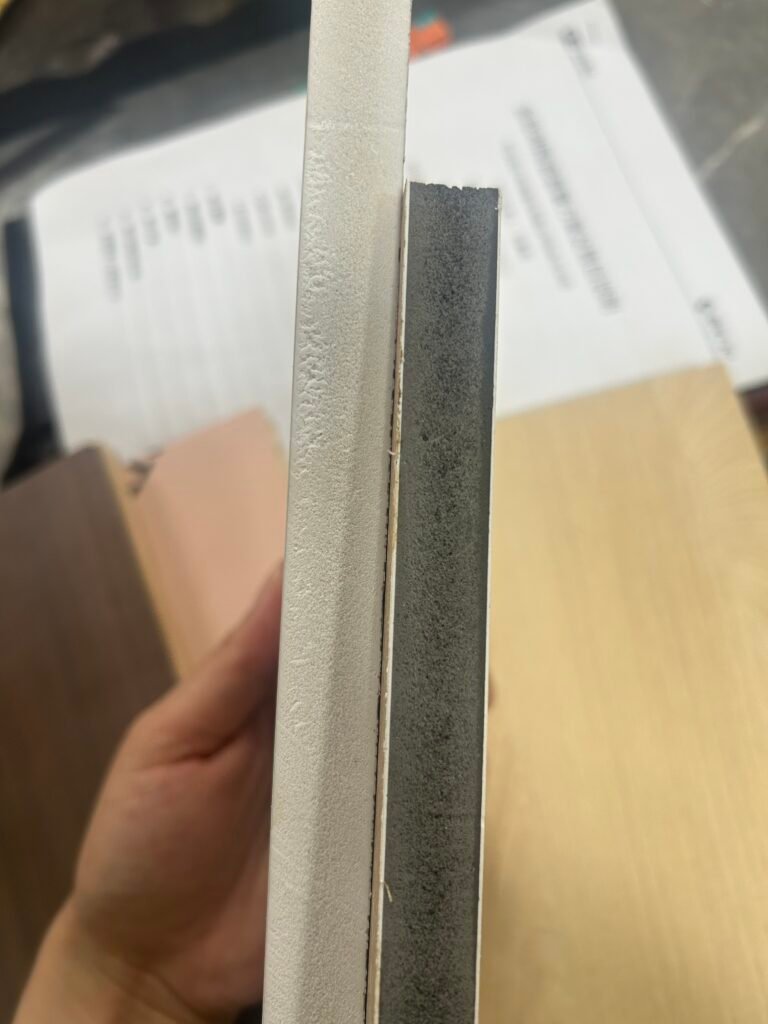
PVC laminate
- Solid Wood: Natural texture, eco-friendly, high-end feel, but sensitive to humidity.
- Plywood: Stable structure, resistant to warping, ideal for mid- to high-end hotel customization.
- MDF/HDF: Smooth surface, easy to apply different finishes, cost-effective, but absorbs moisture and requires proper water-resistant treatment.
- PVC Laminate: Waterproof and easy to clean, suitable for humid environments, though less premium in feel compared to solid wood.
Procurement managers should select materials based on hotel positioning, budget, and bathroom humidity conditions.
Bathroom Cabinet Design and Process Planning
1.Design Stage
Modern bathroom cabinet design focuses on both aesthetics and functionality. Designers usually consider:
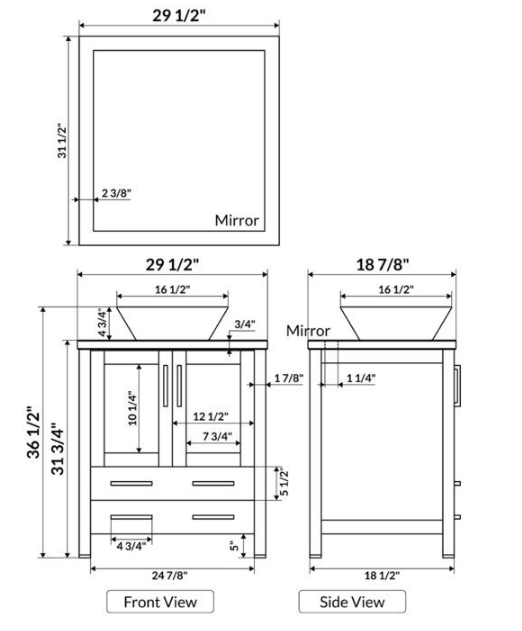
- Storage Layout: Efficiently organize drawers, doors, and shelves.
- Plumbing and Electrical Space: Ensure internal space accommodates water pipes and electrical outlets.
- Surface Finish: Choose between spray painting, UV coating, or laminates according to hotel style, balancing beauty and durability.
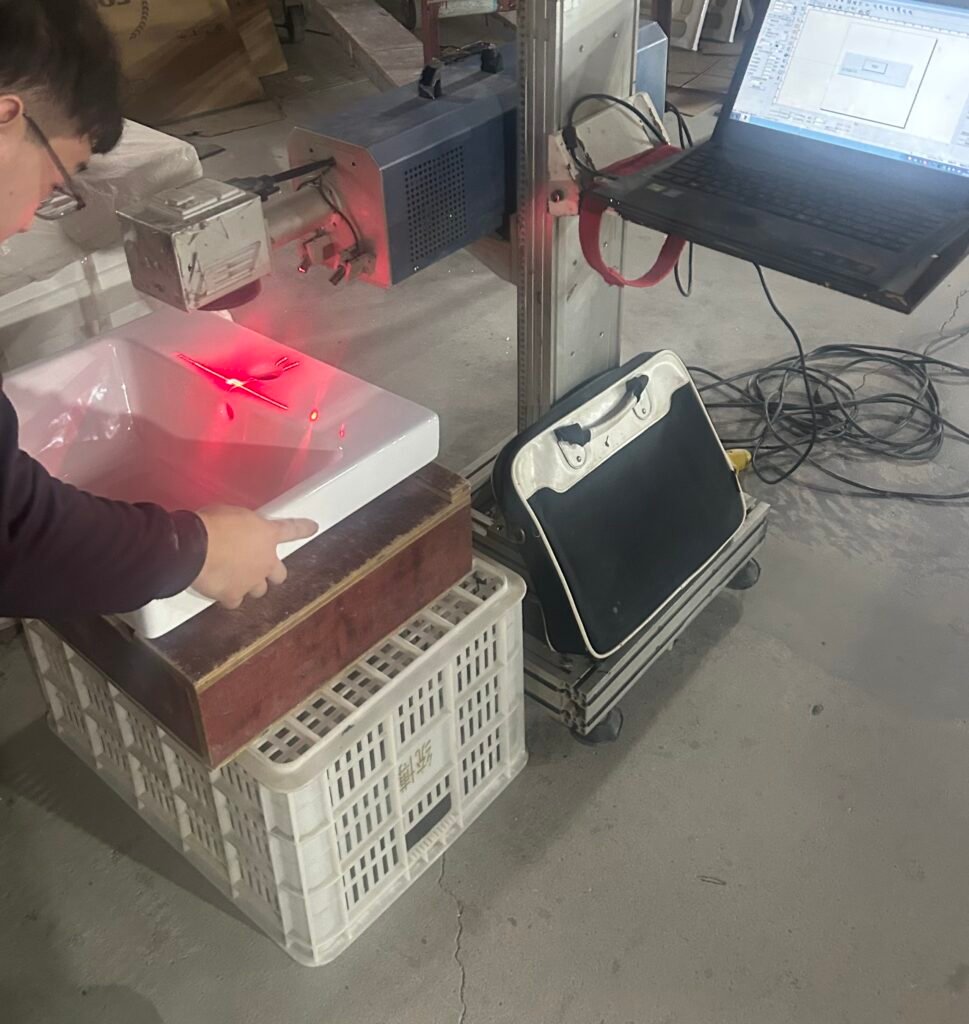
3D modeling software allows designers to visualize the cabinet in actual space, providing precise dimensions and process guidelines for production.
2.Process Planning
Process planning is crucial and involves:
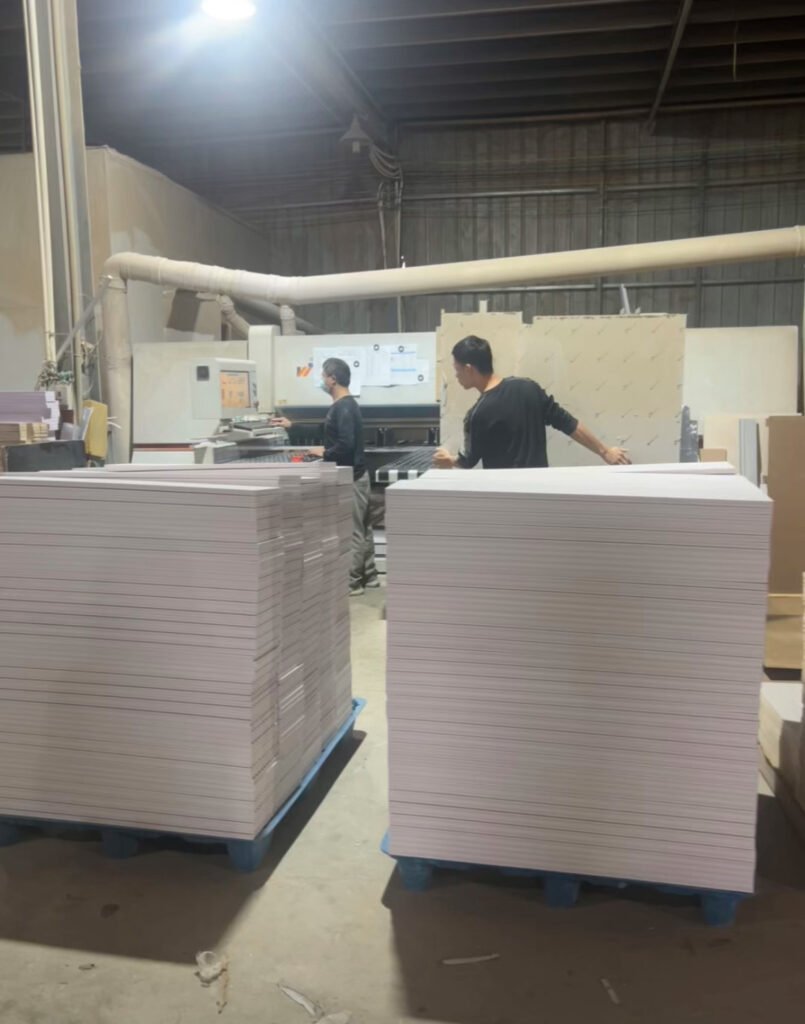
- Cutting Methods: Combining CNC automated cutting and manual adjustments to ensure precision and flexibility.
- Surface Treatment: Spray painting, UV coating, or laminates, depending on budget and hotel positioning.
- Hardware Installation: Hinges, drawer slides, overflow protection—ensuring smooth and safe operation.
Detailed Bathroom Cabinet Production Process
3. Material Cutting
CNC machines are used for precise cutting of boards to match the design specifications.
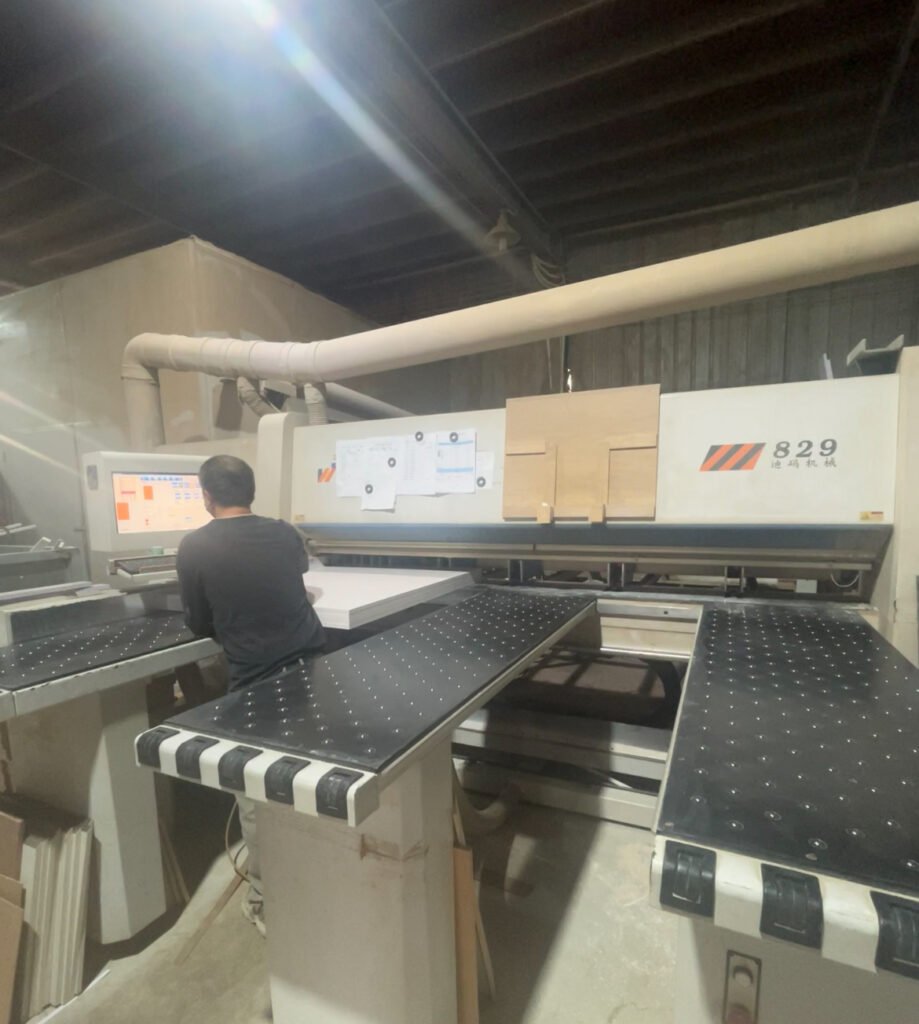
- Advantages: High precision, tolerances within ±0.2mm.
- Notes: Wood moisture content should meet standards (≤12%) to prevent deformation.
4. Edge Banding
Cut boards undergo edge banding with materials such as PVC, ABS, or solid wood strips.
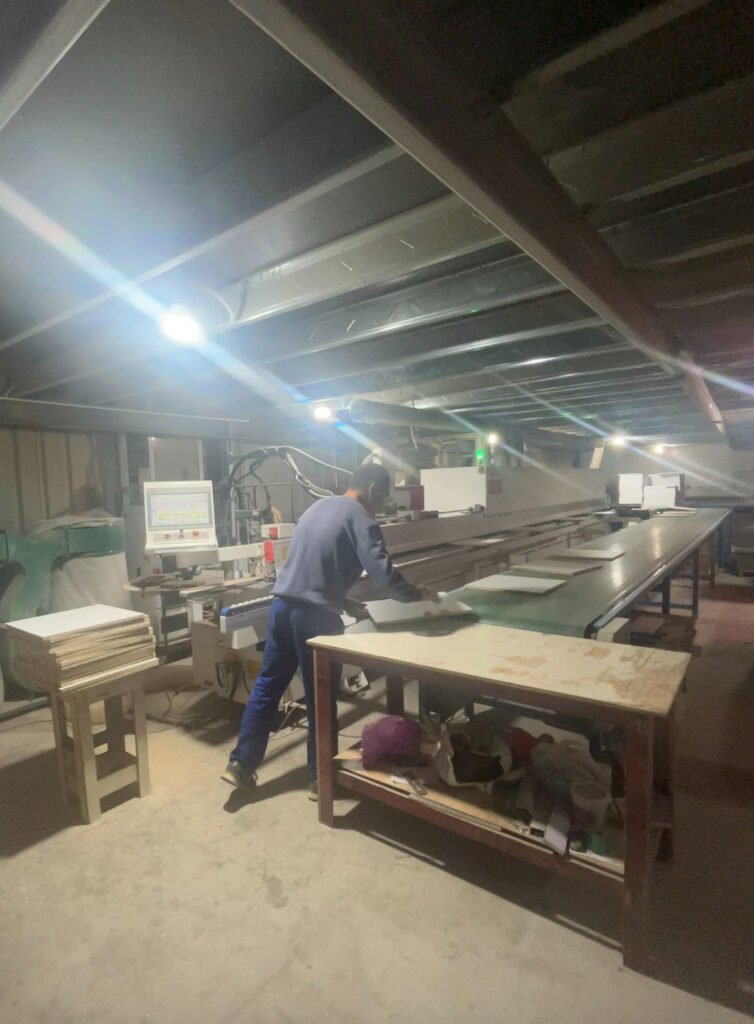
- Purpose: Prevent moisture damage, cracking, and enhance aesthetics.
- Material Comparison:
| Material Type | Advantages | Disadvantages |
|---|---|---|
| PVC | Waterproof, moisture-resistant, cost-effective | Less flexible, may age over time |
| ABS | Durable, eco-friendly | Slightly higher cost |
| Solid Wood | Premium feel, natural texture | Less water-resistant, requires additional treatment |
5.Assembly
The cabinet components are assembled, including the bottom, sides, back panel, and shelves.
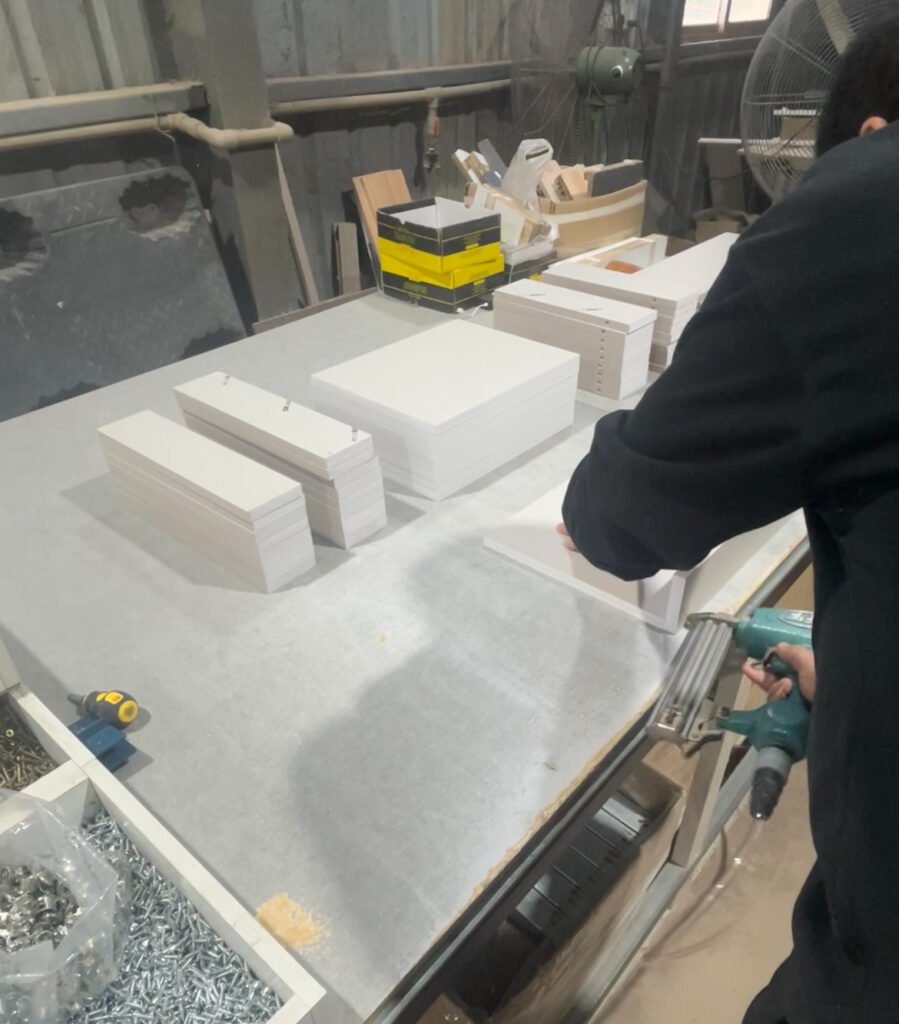
- High-end hotel projects typically use mortise and tenon joints for added stability.
- Mid-range projects often use screws or rivets for faster assembly.
6.Surface Treatment
Surface finishing determines the cabinet’s appearance and longevity. Common methods:
- Spray Painting: Suitable for curved and complex surfaces, high gloss.
- Lamination: Good moisture resistance, ideal for flat surfaces.
- UV Coating: Scratch-resistant, long-lasting color, widely used in high-end hotels.
7.Hardware Installation
Install drawer slides, door hinges, sink holes, and overflow protection fittings.
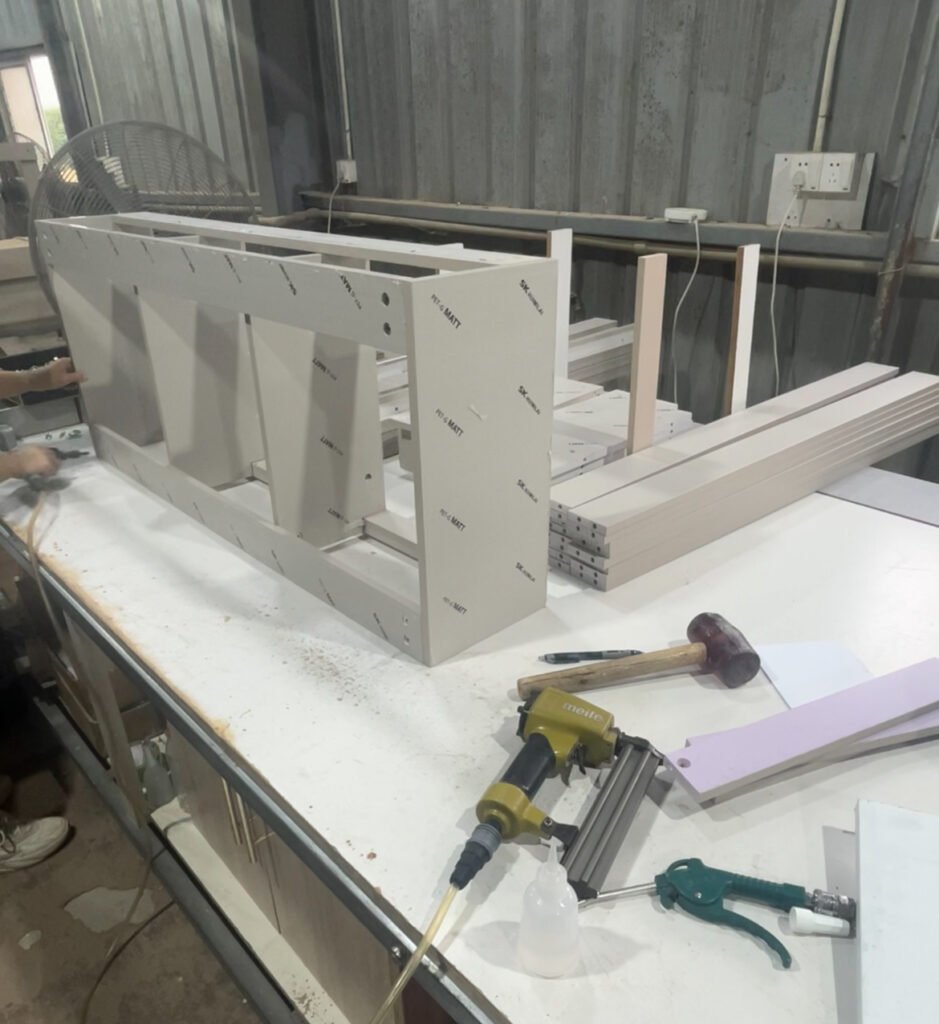
- High-quality slides can support 30–50 kg and operate smoothly.
- Precise installation ensures long-term quiet and stable use.
8. Quality Control and Packaging
Final steps include:
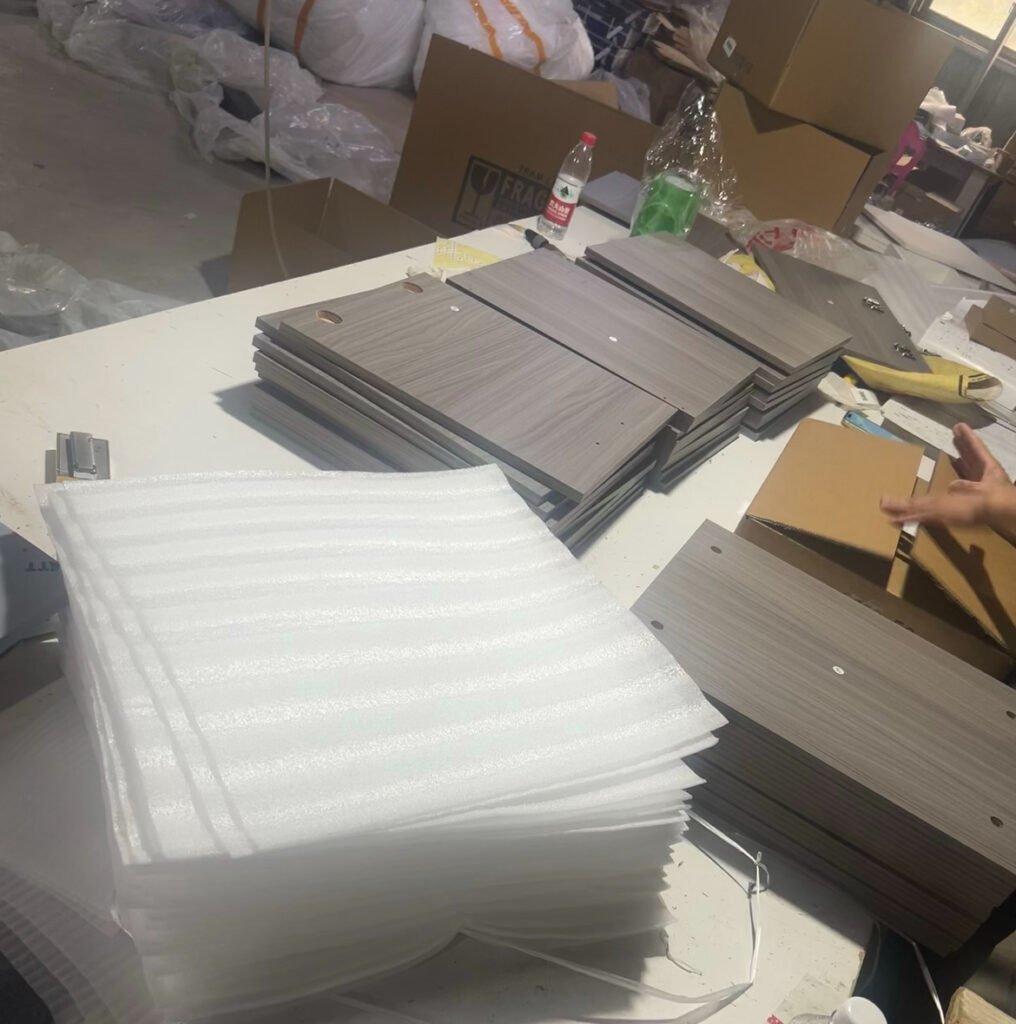
- Dimensional inspection
- Surface flatness and color consistency check
- Moisture and mildew resistance testing
- Protective packaging for safe transport
Hotel Project Customization Examples
Here are five typical hotel project bathroom cabinet customization examples, showing different regional requirements:
Central Asia Hotel Project
- Project Requirements: 5-star business hotel rooms, moisture-resistant with efficient storage.
- Customization Features: Plywood + PVC laminate, high-load drawer slides, simple cabinet doors.
- Highlights: Cabinet dimensions precisely match plumbing layout, maximizing space utilization.
Middle East Hotel Project
- Project Requirements: Luxury resort hotel, high-end look and feel.
- Customization Features: UV-coated surface, modular internal shelves for easy cleaning.
- Highlights: Overflow protection design enhances safety and reliability.
Southeast Asia Hotel Project
- Project Requirements: Chain hotel standard rooms, cost-effective and easy to maintain.
- Customization Features: MDF + ABS edge banding, good moisture resistance, efficient batch delivery.
- Highlights: Fast production cycle ensures hotel opening schedules are met.
Europe Hotel Project
- Project Requirements: Boutique hotel, emphasizes visual design and spatial experience.
- Customization Features: Solid wood + UV coating, fully custom dimensions.
- Highlights: Unique shapes and colors perfectly align with overall hotel design.
Latin America Hotel Project
- Project Requirements: Resort hotel, aesthetics and moisture resistance required.
- Customization Features: Plywood + PVC laminate, adjustable internal shelves.
- Highlights: Full moisture and mildew protection, suitable for humid environments.
Bathroom Cabinet Production Process Comparison
| Process Stage | Handcraft | Mechanized | Suitable Scenarios |
|---|---|---|---|
| Material Cutting | Flexible, small batch | High precision, high efficiency | Large-scale hotel projects |
| Edge Banding | Refined, premium feel | Fast and stable | Mid- to high-end projects |
| Surface Treatment | Complex curved surfaces | Smooth, batch-friendly | Standardized hotel projects |
| Assembly | Mortise & tenon, very stable | Screw/rivet, fast | Flexible according to project needs |
| Hardware Installation | Fine adjustment | Automated | Batch customization projects |
FAQ: Common Questions for Hotel Project Procurement
Q1: How to check a bathroom cabinet’s moisture resistance?
A1: Check the board’s moisture content (≤12%) and surface treatment (PVC, UV coating, laminate).
Q2: What is the shortest delivery time for hotel project custom cabinets?
A2: Standard batch production: 30–45 days; high-end handcrafted customizations may take 60+ days.
Q3: Any recommendations for drawer slides?
A3: Use soft-closing slides, high load capacity, smooth operation, long-lasting durability.
Q4: Can OEM/ODM services handle bulk hotel project customizations?
A4: Yes, Chinese bathroom factories provide one-stop solutions from design to production and packaging for hotel projects.
Q5: Are there significant cost differences between surface treatments?
A5: Spray painting and UV coating cost more than laminates, but provide better texture and durability; choose based on hotel positioning.
Conclusion
From raw material selection to finished products, the bathroom cabinet production process covers design, cutting, edge banding, assembly, surface treatment, and hardware installation. Each step directly impacts the quality and lifespan of the final product. Understanding this process helps global hotel procurement managers choose reliable manufacturers and ensure smooth project implementation.
For those seeking OEM/ODM bathroom cabinet solutions, Danube provides full customization from design to finished product, supporting various materials, surface treatments, and hardware configurations, meeting the unique requirements of diverse hotel projects.